
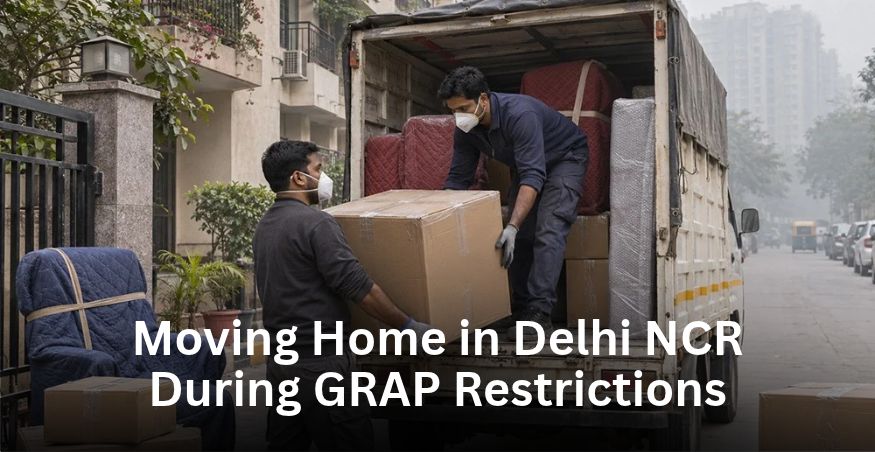
Every November we get the same phone calls from our worried customers. Someone has booked their house shifting for the weekend, the AQI has just crossed 350, and a news alert says GRAP Stage III is now in effect. The next question is always some variation of “Will the truck even be allowed in?”
It’s a fair question. GRAP isn’t for movers, but many of its rules apply directly to the trucks and crews involved in house shifting in Delhi NCR.
The good news is that most moves still happen during GRAP, as long as the vehicle is compliant and planning is a little tighter than usual. In this post, we’ll explain what the restrictions say, how they change your moving day and what to ask your packers and movers before you pay an advance.
Before we start, here is one quick warning. Rules change quickly here. GRAP moved this season from Stage I on 21 October to Stage III on 6 November, so use this post as a guide to how the system works, and check the latest CAQM order before you lock in your date.
What Is GRAP?
GRAP stands for the Graded Response Action Plan, which the Commission for Air Quality Management (CAQM) uses to switch on stricter pollution controls across the NCR (National Capital Region) as air quality worsens.
There are four stages tied to AQI bands, and each stage adds to the one before it. Nothing is switched off when the stage goes up.
You need to get two things straight that are absolutely vital to the planning.
- CAQM often invokes a stage based on the forecast, not just the day’s reading, which is why Stage III arrived when Delhi’s AQI was around 380.
- The rules cover the whole NCR, so they also affect Gurugram, Noida, Ghaziabad and Faridabad, along with Delhi.
The Four Stages of GRAP in Moving Terms
| Stage | AQI Band | What It Can Mean for Your Move |
| Stage I (Poor) | 201 to 300 | Dust control and generator limits. Commercial vehicles not headed to Delhi get diverted at the borders. Moving day barely changes. |
| Stage II (Very Poor) | 301 to 400 | Tighter dust control and more checks on visibly polluting vehicles. An old, smoky truck is more likely to be stopped. |
| Stage III (Severe) | 401 to 450 | Restrictions apply to demolition and specified construction work. Older diesel vehicles face restrictions, including BS-IV and older diesel light and medium goods vehicles registered outside Delhi. |
| Stage IV (Severe+) | Above 450 | BS-IV and older trucks cannot enter Delhi under Stage IV, even when carrying essential goods. The strictest curbs fall on older trucks and heavy goods vehicles. |
Stage III is the one that worries movers most, and with good reason. Stage III targets the small and medium trucks that carry most household goods, especially older diesel models with out-of-state registration.
Truck Rules: Where Most Delays Come From
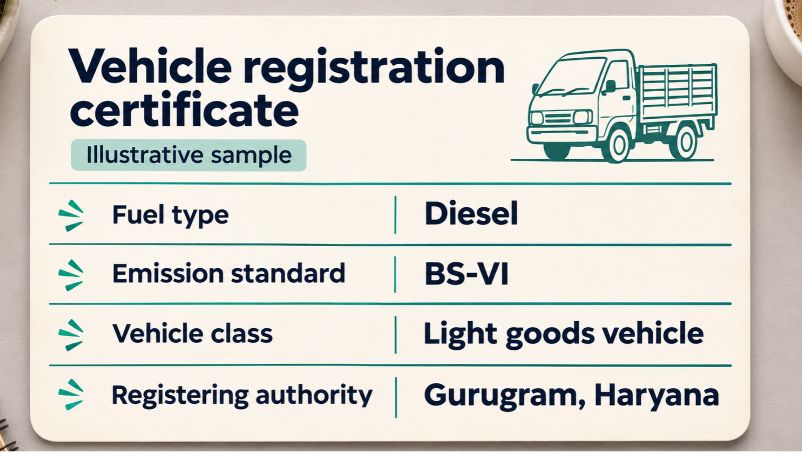
In addition to GRAP, a separate winter entry rule runs from 1 November 2026 to 31 January 2027. During this period, vehicles registered outside Delhi that do not meet BS-VI standards are barred from entering the capital unless an exemption applies. BS-VI, CNG and electric vehicles are allowed. Delhi-registered goods vehicles are outside the scope of this entry rule. During Stage III, however, Delhi restricts the use of its own BS-IV and older diesel medium goods vehicles within the city. Vehicles are also expected to carry a valid Pollution Under Control Certificate (PUCC).
Here is why GRAP matters for house shifting. Plenty of packers and movers in Delhi run fleets that are registered in Haryana or Uttar Pradesh because their yards are in Gurugram, Noida or Ghaziabad. If your mover sends an older diesel truck with out-of-state plates, it may be turned back at the border, and you will find out at 8 in the morning with half your household packed. That single scenario causes more GRAP-related move-day trouble than anything else.
Outstation moves have their own nuances. Goods vehicles whose destination is outside Delhi are advised to skip the capital and use the Eastern or Western Peripheral Expressway. If you are moving from Noida to Jaipur or from Ghaziabad to Chandigarh, expect the truck to take a longer route than the one Google Maps suggests, and make sure your quote accounts for the extra distance.
During Stage IV, even a truck carrying essential goods must meet the vehicle-entry rules. Ask your mover which truck will carry your household goods. If a mover tells you the rules don’t apply to them, treat that as a warning sign. Our guide on red flags when hiring movers in Delhi covers more of these.
The Construction Ban and Your New Home

Stage III restricts specific building and renovation work across the NCR. You can still move into a flat that is ready to occupy. If you planned to renovate your new flat before moving in, expect dust-heavy work such as civil work, tiling and demolition to pause. Indoor jobs such as fitting taps or light fittings can continue if the contractor follows dust-control rules. Painting, polishing and varnishing must pause. Still, the details change, so confirm with your contractor against the current order.
The practical lesson is to keep a buffer between the end of renovation and your move-in date. Moving in two days after the painters finish is risky in any season, and GRAP makes it riskier. It is also worth asking your housing society about its own rules for move-in timings and lift booking, since some societies get stricter when a pollution stage is active.
What Actually Changes on Moving Day
In practice, the restrictions are more likely to affect when you can book a truck and how much you pay. Movers have fewer vehicles to choose from, especially when older trucks cannot operate in restricted areas. The BS-VI, CNG and electric vehicles still allowed on the roads have to handle the bookings. This can make it harder to get a truck on a busy weekend, and you may have to accept a different time or pay more than you expected.
The cost of the move may change too. If a mover has to arrange a different truck, take a longer route or make changes to the crew’s schedule, the final price could go up. These extra charges are not necessarily unreasonable, but the mover should explain them and include them in the revised quote before the move begins. You should not be asked to pay unexpected charges when the truck reaches your new home. Our article on why quotes from packers and movers in Delhi differ explains what to look for before agreeing to a price.
Delays are another possibility. Traffic diversions, border checks and longer routes can push the schedule back by several hours. A move that was supposed to wrap up by evening may not finish until much later. If children or elderly family members are at home, it is worth setting aside extra time rather than planning everything around the original arrival time.
Looking After Your Crew and Your Belongings
Smog does not only affect trucks. The people carrying your furniture are breathing it all day, and your belongings sit in it between the house and the truck.
If you can choose the time, ask for loading to start a little later in the morning. Air in Delhi is often at its worst in the early hours and late evening, and it tends to be a bit better in the middle of the day. Ask your crew whether they use masks, because a good one is cheap and your movers should not mind the question.
For your belongings, wrap upholstered furniture, mattresses and clothes in plastic or fresh covers, and seal electronics in their original boxes or in bubble wrap and cartons. Keep important documents, jewellery and chargers with you in your own bag, as our piece on protecting your valuables during a move suggests. Expect to dust and wipe things down on arrival, because even a perfectly packed move can pick up grit during a smoggy week.
Choosing Packers and Movers in Delhi During GRAP: Ask These Questions
A few specific questions will tell you more about a mover than any brochure. Ask them over the phone or WhatsApp, so you have a written trail.
- Which vehicle will actually come? Ask for the fuel type, emission standard and registration state. Ask for the registration number a day before the move so you can check it yourself.
- Does the vehicle have a valid PUCC? It is a small document, but it is one of the first things checked at a border.
- What happens if the GRAP stage goes up before my move? A good moving company will have a solution ready, such as shifting the vehicle or rescheduling at no penalty.
- Will the quote change if a compliant truck is needed? Get the final amount in writing, including any extra distance for an outstation route.
- Is my advance refundable or transferable if the move is postponed because of GRAP? This question separates careful movers from careless ones.
- What protection does the crew use? Masks, covers for furniture and a plan for dusty loading areas all count.
If you are still shortlisting, our Packers and Movers in Delhi page explains how we verify partners, and our house shifting services page shows what a standard move includes.
Should You Postpone Your Move?
You don’t need to postpone your move just because GRAP restrictions are in force. The rules affect which vehicles can operate and what activities are allowed. The rules aren’t meant to prevent people from shifting homes. If your mover has an eligible truck and the crew is properly prepared, the move can usually go ahead during Stage II or Stage III.
However, sometimes changing your moving date is the better option. During Stage IV, ask your mover to confirm which truck will be sent and whether it is permitted to operate. If they cannot give you a clear answer, postponing by a few days may save you from last-minute cancellations. You may also want to avoid moving during a particularly bad spell of pollution if your household includes someone with asthma or breathing difficulties, or a newborn. The same applies if renovation work at your new home is unfinished and has been affected by construction restrictions. Moving in before the dust settles can make the first few days uncomfortable.
Delhi’s seasonal entry restriction runs from November through January. If you move after winter, your mover still needs to check the year-round entry rules for goods vehicles registered outside Delhi. If you need to move during winter, choosing a mid-month weekday can make scheduling easier. Our guides on why winter can be a good time to book movers in Delhi and why end-of-month moving costs more can help you decide when to book.
Quick Answers to Common Questions
Can packers and movers enter Delhi during GRAP Stage IV?
Yes, provided the mover sends a truck that meets Delhi’s entry rules, such as a BS-VI diesel, CNG, LNG or electric truck. Before you move, verify the exact vehicle with your mover.
Is house shifting banned during GRAP?
No. The restrictions apply to certain vehicles and to non-essential construction. You can move with a compliant vehicle.
Do the rules affect local shifting within Delhi?
Delhi-registered commercial goods vehicles are generally in a better position than out-of-state ones, but older diesel vehicles can still face limits at higher stages. Ask about the specific vehicle in either case.
Will my moving charges go up during GRAP?
Shifting charges might rise during GRAP, especially on outstation routes or when a compliant truck replaces an older truck. So, you must ask for a written quote that includes these costs up front.
The Bottom Line
GRAP doesn’t have to kill your house-shifting plans, but it rewards those who plan ahead and ask the right questions. Know what vehicle is coming, be a bit flexible with your dates (a day or two either way is fine), build a bit of a buffer around any renovation and get all the details on charges and rescheduling in writing. If you’d like help planning your move around the current restrictions, get a free quote from Moving Solutions. The Moving Solutions team will be very straightforward about what is actually possible.
Last updated: 12 November 2026. GRAP orders can change at short notice, so please check the latest CAQM and Delhi Traffic Police advisories before finalising your move date.

A copywriter, blogger, content strategist by profession, and an information junkie by heart. I have a penchant for reading, researching, writing, and anything related to creating persuasive content. For me, writing is something that ignites my creativity and helps in keeping me on cloud nine. I have been working in the content writing domain since 2006. Be it blogging or copywriting, I create better content that fuels conversations and skyrockets search traffic.